Large carriers are shifting how they operate with a heightened goal of efficiency. This shift has significant implications for ecommerce companies, fulfilment centers, 3Pls and manufacturers.
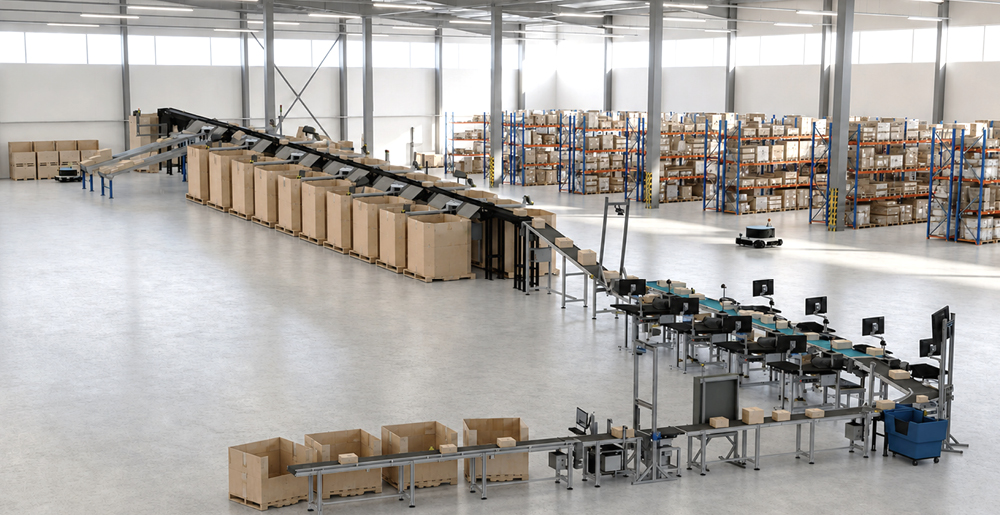
As carriers become more focused on controlling costs and optimizing their networks, organizations will need to examine how efficiently they process, sort and prepare parcels. Automated parcel sorting systems are being leaned on more and more to help them adapt to the new requirements.
UPS, FedEx and other large carriers have historically prioritized parcel volume. The rule of thumb was always the more parcels moved at the highest speeds, the better. Today the goal is to move packages using the least amount of labor, vehicle space and facility resources.
One of the areas that carriers are focused on is shipment density. Not just more parcels, but more parcels relative to the resources required to move them. The goal is to use fewer resources by improving route efficiency, maximizing transportation capacity and reducing costly handling requirements. A truck delivering hundreds of packages within a concentrated area is typically more efficient than a truck covering a large area with fewer deliveries.
The physical characteristics of a package are also a focus. Large, lightweight packages take up significant space on carrier trucks and planes while generating relatively small amounts of revenue. These types of parcels also require additional handling and sometimes special equipment to move them. The result is higher labor and equipment costs. As a result, carriers are increasingly assigning additional handling fees and oversized package surcharges for larger packages.
Today, carriers increasingly use dimensional weight pricing, which factors in both the weight and size of the parcel. Organizations that have been focusing only on parcel size need to be considering the cubic volume and dimensional weight of parcels as well.
As these new efficiency requirements begin to take hold, we are seeing variations in how they are applied across the carrier landscape. Carriers are applying dimensional weight calculations, size thresholds, surcharges and service offerings differently. As a result, shippers are increasingly being forced to implement a multi-carrier strategy to ensure they are receiving the lowest rates depending on their package type.
Although a multi carrier strategy can introduce cost efficiencies for the companies themselves, it makes processing more complex and time consuming. In addition to capturing dimensions and weight, workers may need to determine the appropriate carrier for each individual package, print different labels, and manually sort parcels into multiple lanes. These more complex requirements dramatically increase the chance for errors.
Errors can not only lead to carrier fees, but also to delayed deliveries, customer tracking issues and additional labor required to locate, correct and reprocess packages that were sent incorrectly.
Automated parcel sorting systems are equipped with a range of capabilities that can help organizations adapt to the new carrier requirements. Automation allows companies to process more packages with fewer errors and less labor while gaining greater control over what they pay carriers.
As shipping costs are more frequently being determined by package weight and dimensions, capturing this data accurately has become more important than ever. Automated parcel sorting systems that are equipped with automated dimensioning equipment and weight scales can help operations avoid measurement errors that can result in a package being rated incorrectly and the potential for additional charges.
Automated parcel sorting systems can more accurately capture package data and route each parcel to the appropriate carrier with more accuracy than manual processing. The system can automatically direct packages based on the rules established by the shipper. This becomes particularly valuable when a facility is using multiple carriers.
Carriers are more frequently requesting a digital manifest that incudes parcel weight and dimensions. They do so to ensure the packages are meeting their requirements and to assign the correct fees. Automation systems with manifesting capabilities can dramatically increase the accuracy of this data reporting and thus help companies avoid financial penalties.
Not long ago the key benefits of automated parcel sorting systems were labor savings and increased throughput. Today the same benefits apply, however a new set of factors have arisen that make the technology critical to remaining competitive. Over 70% of distribution centers in the United States use automated sorting technologies to handle large-scale operations, according to Precision Reports. Reach out to our team to learn more about how you can move from manual to automated sorting, or to upgrade existing equipment.