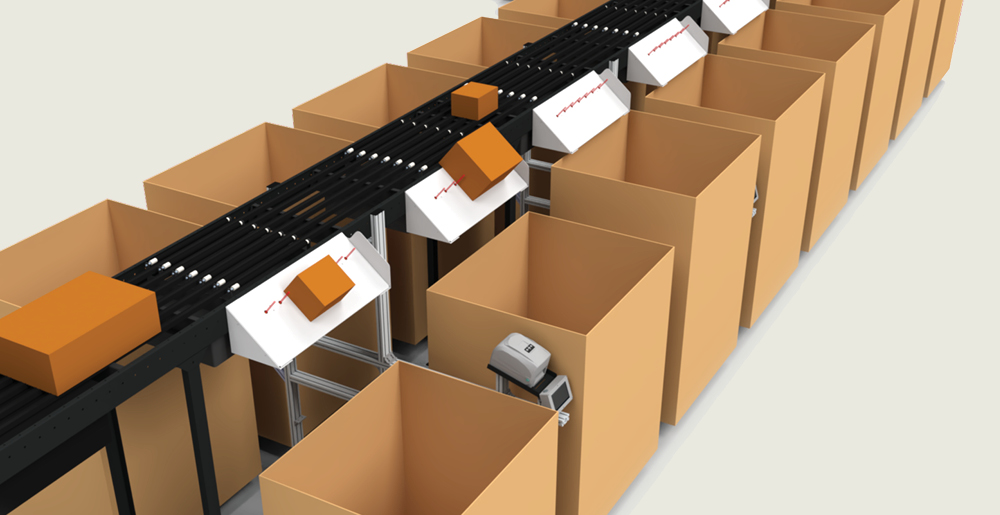
Automated parcel sorting systems are highly effective for increasing parcel processing throughput, reducing processing errors, and reducing labor requirements. Depending on the system, and the throughput needs, there are certain features that may make financial sense to add that can make them even more productive. Chute sensors are one, especially on systems that are manifesting packages to containers.
Chutes are sloped or vertical pathways that guide parcels from the sorter down into their designated container. Chute sensors can be positioned under the chute or at or around the divert point where the sorter meets the chute. Their main purpose is to monitor the parcel as it is moved into the container to ensure that the parcel is being processed effectively.
ID Parcel & Mail Solutions is currently installing chute sensors onto an existing Packet Parcel Sorting System (PPSS) for a client. The goal is to enhance piece to container capabilities to ensure that the right parcel is reaching the right container.
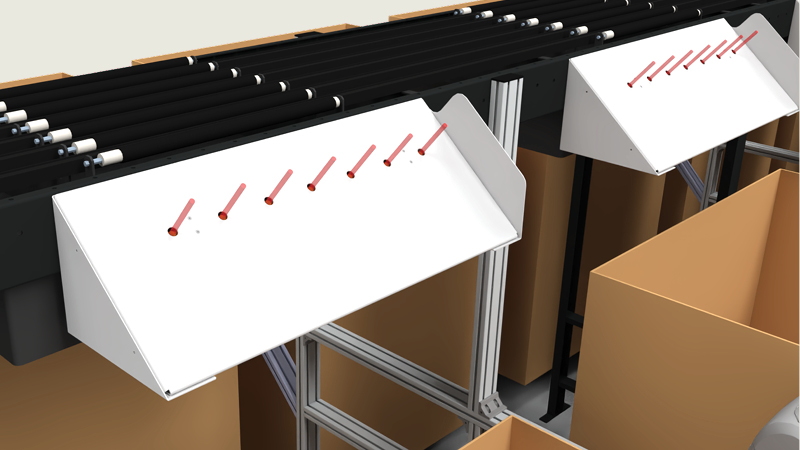
The sensors on this setup are mounted underneath the chutes. They use a laser array with seven sensors that detect the parcel as it passes over holes in the chute itself. If the sensors detect that the wrong package has entered the chute, the system will alert the operator so that the mis-sorted package can be removed.
In addition to helping avoid mis-sorts, chute sensors can be set up to verify that each parcel has successfully arrived as well as when a parcel has entered the chute. Since carriers need to know exactly what’s in each automated parcel sorting system container, tracking this information helps to ensure the manifest accurately matches the physical contents of each container. This is important for additional processing, manifesting a shipment, and final-mile delivery.
Other key responsibilities of chute sensors include their ability to control sorting congestion and enhance the safety of the packages. If the chute becomes jammed, the sensors will detect the issue and send a signal to stop the system from sorting additional parcels down the chute. This effectively helps packages from becoming damaged during a pileup and avoids stopping the sorting system. Some sensors can also detect human activity and stop operation if a person enters a restricted zone.
There are a wide range of chute sensor technologies available. Choosing one will depend on the specific design of the system, throughput requirements, and types of parcels that are being processed.
Photoelectric Sensors use a beam of light that is interrupted when a package passes through. This style is effective for the simple task of detecting the presence or absence of a parcel.
Laser Scanners are a more accurate tool for detecting issues involving package size and shape. This can be effective if the container is only intended to receive packages of a particular thickness or those with specific dimensions.
Weight & Load Sensors detect when packages have successfully arrived to the container. They also help ensure that the container weight is not exceeded, as this is an indication that the container is overloaded.
Ultrasonic Sensors use sound waves that bounce off the parcel. The system measures the time it takes for an echo to return. These sensors can detect the presence of a parcel as well as their distance from the chute. They can be effective for detecting dark or transparent parcels that have the potential to be missed by optical sensors.
RFID or Barcode Sensors will read the barcode just before being diverted to the chute to double check that the right package is reaching the right container.
When ID Parcel & Mail Solutions designs an automated parcel sorting system, or provides supplementary components to existing equipment, we carefully evaluate each system to ensure the investment will pay off. For more information about chute sensors, and to determine if they are right for your equipment, please reach out to our team.